dispatches on everyday life, social and political realities, the cycles of history, the complexities of civil society, political poetry and song and the struggle of being a good citizen whilst resisting corporate hegemony (and having a laugh) from one of the most isolated cities in the world.
"I mined in your mines and I gathered in your corn I been working, mister, since the day I was born Now I worry all the time like I never did before 'Cause I ain't got no home in this world anymore
Now as I look around, it's mighty plain to see This world is such a great and a funny place to be; Oh, the gamblin' man is rich an' the workin' man is poor, And I ain't got no home in this world anymore."
Woody Guthrie
No one does Woody Guthrie's songs of capitalist plundering and immiseration better than Billy Bragg.
On his most recent album, Tooth and Nail, Billy Bragg does a magnificent cover version of Woody Guthrie's Great Depression era song 'I Aint Got No Home', one of the great political folk songs.
Woody Guthrie composed 'I Ain't Got No Home' in 1940 and recorded the song in the same year. It first appeared on Woody Guthrie Dust Bowl Ballads Volume 2.
The tune is based on a traditional hymn titled 'I Can't Feel Home in this World Anymore' that was made famous by the Carter Family.
The song could have been written in the last 8 years. It is all there- people losing their homes to the bankers, people dying for lack of proper health care, the rich making millions by gambling on the stock market while ordinary people's wages go backwards.
The song has a contemporary resonance with its musings about "Now I worry all the time like I never did before/ Cause I ain't got no home in this world anymore", how the “rich man took my home and drove me from my door” and mention of “the banker’s store”.
Earlier versions of Guthrie's song concluded by stating that the hardship expressed in the song is happening to "a hundred thousand others and a hundred thousand more," all of whom were victimized by the more fortunate elite. Once again, a reflection of what has happened since the 2008 economic crash.
Bragg, like Woody Guthrie, is a singer songwriter who made his name with socio-political songs and his involvement in social movements and political campaigns. Bragg is known as a combative British socialist who doggedly opposed the British Conservative Party and its leader Margaret Thatcher throughout the ’80s and ’90s.
This version of Woody Guthrie's song appears on Billy Blagg's 2013 album Tooth and Nail, which was produced by American singer songwriter Joe Henry whose work has appeared on this blog before.
Woody Guthrie's version of the song is here
The song has also been covered by Bob Dylan and Bruce Springsteen. Springsteen's version (with slightly different lyrics) is here.
I Aint Got No Home
By Woody Guthrie
I ain't got no home, I'm just a-roamin' 'round, Just a wandrin' worker, I go from town to town. And the police make it hard wherever I may go And I ain't got no home in this world anymore.
My brothers and my sisters are stranded on this road, A hot and dusty road that a million feet have trod; Rich man took my home and drove me from my door And I ain't got no home in this world anymore.
Was a-farmin' on the shares, and always I was poor; My crops I lay into the banker's store. My wife took down and died upon the cabin floor, And I ain't got no home in this world anymore.
I mined in your mines and I gathered in your corn I been working, mister, since the day I was born Now I worry all the time like I never did before 'Cause I ain't got no home in this world anymore
Now as I look around, it's mighty plain to see This world is such a great and a funny place to be; Oh, the gamblin' man is rich an' the workin' man is poor, And I ain't got no home in this world anymore.
Excellent article by Raewyn Connell on the need to expose and challenge the theft and plunder perpetrated by corporate executives. Connell writes:
"The very top corporate managers now sit on top of a tall tree of
bonuses and incentives, which have become an institutionalised and
expected part of income. (Board remuneration committees scrutinise
“comparators,” and executive search firms compile the data.) Inside this
world, it seems common sense that the top managers’ bonuses and
incentives should be higher than all the rest. How could it be
otherwise? That would be an insult to the most excellent.
There is also an effect of the “financialisation” of modern
capitalism – the growth of finance capital, and its hegemony over the
industrial and agricultural capital that ruled the roost in other eras.
The mind-boggling scale and reach of contemporary financial markets
hasn’t exactly replaced other forms of economic activity – we still
produce the goods and services. But it has changed the frame of
reference for corporate elites. They now live in a world where gigantic
profits are often made without any commitment to productive investment,
and where financial operations constantly impinge on industrial, mining
and trading corporations. Even inside corporations, the separation of
control from operations has grown. The new head of Rio Tinto, Sam Walsh,
made his mark by automating the firm’s iron ore operations in the
Pilbara, locating the control rooms down in Perth. (And happily
eliminating part of the Pilbara workforce.)
Inevitably the point of comparison for corporate managers shifts from
their own businesses to the world of international finance. At the same
time, the financialisation of the business world makes the elite
packages, of which the larger part is almost always the bonuses and
incentives rather than the simple salary, easier to pay and more normal
in appearance.
These trends are not the whole explanation of the great rise in
executive incomes, but they are a considerable part of it. The
neoliberal era, almost everywhere in the world, has seen rising levels
of economic inequality. In the developing world, neoliberalism has meant
increased unemployment and massive growth in the informal economy. In
rich countries there is some informalisation but also a sustained
squeeze on welfare incomes (the removal of sole parents’ benefit is a
recent Australian example). There are growing gaps in the wage
structure, and a much less progressive tax system than a generation ago.
Corporate executives are among the most spectacular beneficiaries of
this society-wide process.
To put it in a nutshell, the corporate managers are not earning
wages. Markets have little to do with it. They are building fortunes.
Their organisational power enables them to claim a share of the
expanding financialised capital in the modern economy, and convert part
of that share into extremely high incomes. Within an environment of
privilege, this claim becomes a matter of common sense and routine. And
though there are many critics of the result – the anti-globalisation
movement, the Occupy movement, and some of the unions – there is not at
present any social force that has been able to reverse it.
Connell's arguments remind me of those of criminologist David Friederich who argues that the corporate
culture and practices that provide for and justify excessive executive
compensation for corporate executives not only creates what he calls
"crimogenic conditions" but are likely to lead to the taking of money
that belongs to others.
For Friederichs it is time to criminalize
this behaviour. He calls it a form of robbery:
""Walking
into a bank with a gun and demanding money from a teller is one way to
steal money... Walking into a corporate boardroom and securing from the
board's compensation committee, made up of cronies, paid consultants,
and even relatives, compensation of millions sometimes tens of millions
or hundreds of millions is another way to steal money. The principal
differences are that the second way of stealing money pays much better,
is all too often legal, and does not result in criminal prosecution and
imprisonment. This needs to change"
The practices of
excessive compensation have come to be viewed as standard business
practice rather than as part of a spectrum of corporate criminal
behaviour that goes unrecognized and unpunished. That is how corporate
power works. It redefines reality to serve corporate and private
interests.
As both Connell and Friederichs argue its time to challenge that.
Recent articles by Amy Dean and Andy Kroll in the always excellent Mother Jones demonstrate the lies told by conservative and right wing think tanks who claim that they are independent organizations concerned only with developing and promulgating ideas and policy options.
Michigan? Ohio? Indiana? In the wake of Republican Governor Scott Walker’s over-the-top attacks on public sector workers in Wisconsin, many people are asking which will be the next state to draw the public spotlight. However, looking at the state-level assaults by these arch-conservatives as individual battles might be the wrong approach. Ultimately, the right-wing maneuvers at the state level are part of a closely coordinated strategy. And together they add up to a national story.
.........the right-wing has launched a sneak attack. They are attempting to rush through different statehouses a set of laws that have nothing to do with creating jobs or strengthening the economy. Rather, the laws are about undermining the ability of groups to organize collectively and exercise political influence at the polls. Teachers and government employees, in particular, have been selected because they are some of the last organized voices that oppose an unchecked corporate agenda. They have been strategically targeted because they represent the last vestiges of middle class America.
Kroll shows that the concerted nationwide attacks on labor unions and public services in the US by Republican politicians in states like Wisconsin, Iowa, Michigan, Nevada and California are being coordinated and driven by a network of conservative and right wing think-tanks funded by the US corporate elite and some of the richest businessmen and women in the country.
What is occurring is a not just an attack on labour unions and public services. It is an autocratic power grab to enable corporate power and moneyed elites to rule unilaterally over governments, the economy, and the environment.
Kroll's article demonstrates that right wing and conservative think tanks in the US are committed political players who use their money and power to actively drive political agendas and shape political decisions.
Kroll writes:
From New Hampshire to Alaska, Republican lawmakers are waging war on organized labor. They're pushing bills to curb, if not eliminate, collective bargaining for public workers; make it harder for unions to collect member dues; and, in some states, allow workers to opt out of joining unions entirely but still enjoy union-won benefits. All told, it's one of the largest assaults on American unions in recent history.
Behind the onslaught is a well-funded network of conservative think tanks that you've probably never heard of. Conceived by the same conservative ideologues who helped found the Heritage Foundation, the State Policy Network (SPN) is a little-known umbrella group with deep ties to the national conservative movement.
Its mission is simple: to back a constellation of state-level think tanks loosely modeled after Heritage that promote free-market principles and rail against unions, regulation, and tax increases. By blasting out policy recommendations and shaping lawmakers' positions through briefings and private meetings, these think tanks cultivate cozy relationships with GOP politicians. And there's a long tradition of revolving door relationships between SPN staffers and state governments. While they bill themselves as independent think tanks, SPN's members frequently gather to swap ideas. "We're all comrades in arms," the network's board chairman told the National Review in 2007."
Thinking about the obscenity of the salary paid to the CEO of Woodside (and other CEO's) I was reminded of the views of the great US economist JK Galbraith who in one of his last books The Economics of Innocent Fraud described the self enrichment practiced by the corporate elite as a form of "legal fraud".
I am very much in agreement with the arguements of criminologist David Friedrichs who in a recent paper titled "Exorbitant CEO compensation: Just reward or grand theft" in the Journal Crime, Law and Social Change argued that executive compensation packages should be considered as a form of white collar crime. For Friederichs it is time to criminalize this behaviour. He calls it a form of robbery.
Friedrichs is Professor and Distinguished University Fellow, Sociology/Criminal Justice, The University of Scranton and a lifelong researcher on corporate and white collar crime.
He argues that the corporate culture and practices that provide for and justify excessive executive compensation for corporate executives not only creates what he calls "crimogenic conditions" but are likely to lead to the taking of money that belongs to others.
Friedrichs writes:
""Walking into a bank with a gun and demanding money from a teller is one way to steal money... Walking into a corporate boardroom and securing from the board's compensation committee, made up of cronies, paid consultants, and even relatives, compensation of millions sometimes tens of millions or hundreds of millions is another way to steal money. The principal differences are that the second way of stealing money pays much better, is all too often legal, and does not result in criminal prosecution and imprisonment. This needs to change"
The practices of excessive compensation have come to be viewed as standard business practice rather than as part of a spectrum of corporate criminal behaviour that goes unrecognized and unpunished. That is how corporate power works. It redefines reality to serve corporate and private interests. Its time to challenge that.
Since writing this piece about some of the inconvenient truths not heard during the rescue of the 33 Chilean miners I came across the excellent website Alborada which covers Latin America related issues.
Pablo Navarrete, who edits the site, wrote this excellent article about the reasons why the Chilean accident occurred and the wider context in which the accident took place.
Navarrete shows that the "profit over people" market logic that has driven Chile's neo-liberal economic model since the Pinochet dictatorship was the driving factor for the accident. This profit over people logic has delivered huge profits to the mining companies but has resulted in a terrible safety record and poor salaries and conditions for mine workers.
As Navarrete sees it the centre left governments that ran Chile from 1990-2010 attempted to moderate the harsh social impacts of the neo-liberal model, but did little to challenge the fundamental logic of the model. Mineral exports account for 60% of Chile's foreign earnings.
As a consequence, the mining companies, including BHP Billiton and Rio Tinto who own 57.5% and 30% respectively of Chile's largest copper mine, make super profits at the expense of the great mass of the Chilean people, resulting in a country with one of the most unequal distribution of wealth in the world.
In the UK the richest 1000 people saw their wealth increase by 33%- an increase of $77 billion- over the last year.
The response of the Conservative-Liberal Coalition is an austerity budget that takes most from the poor and cuts billions from public services and gives tax cuts to the rich. An analysis by the Institute for Fiscal Studies found that the poorest families will be hit the hardest by the Budget of the UK Conservative-Liberal Government while changes to income tax will benefit the rich.
Table: The effect of tax and benefit reforms announced in the emergency Budget by income decile group and household type
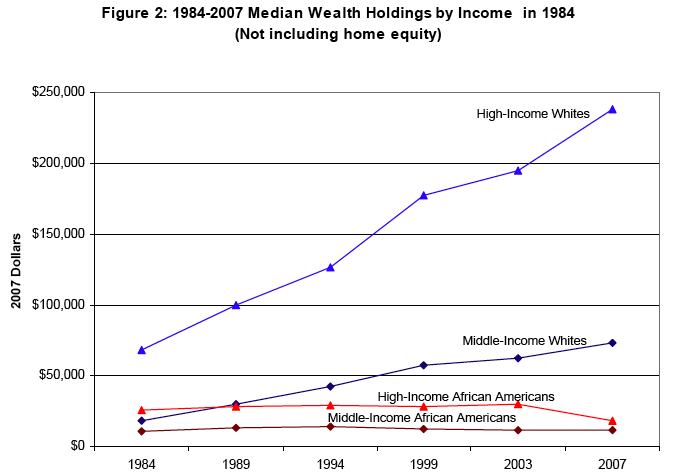
Graphic from the US based Economic Policy Institute on income growth in the USA over the last decade. Would the situation in Australia be any different?
The study authors argue that taxation policies and public policies are major factors in creating this wealth disparity. It would be most interesting to see similar Australian data.
What studies like this remind us (not that we need to be reminded in this country) that public policies that favour and benefit the wealthy and those who control capital (the rich, the corporations, the business elite) ultimately widen the wealth gap not reduce it, and they entrench and intensify inequality.
A recent analysis of the distribution of wealth in Australia undertaken by NATSEM confirms growing inequality in Australia. The richest 20% have 50 time more wealth than the poorest fifth and this differential is growing.
The NATSEM analysis found that wealth remains concentrated in the hands of a wealthy few and the minority of people at the high end of the income and wealth scale reaped the benefits of Australia's economic prosperity. The accumulation of wealth by the already wealthy has been at the expense at the other end of the income scale whose share of personal wealth has declined relative to high income earners.
Frank Stillwell and David Primrose have written a short piece on the findings here.
This trend reflects what David Harvey in his masterly book A Brief History of Neo-Liberalism describes as accumulation by dispossession- the ways that the wealthy are able too "dispossess" others of their assets. The corporate economic system now works so that wealth and money flow from the public purse and the less well off to the more well off.
"It is terrible that human beings so easily put up with existing conditions, not only with the sufferings of strangers but also with their own" Bertolt Brecht, The World's One Hope
"As a direct result of the current global recession, the World Bank reported last week, 89 million more people across the world will next year drop into extreme poverty — less than $1.25 of income a day. Meanwhile, says the latest annual Boston Consulting Group global wealth analysis, the world's financial millionaires last year parked $1.8 trillion worth of offshore assets in Swiss banks, 155 times more than the $11.6 billion the World Bank estimates the world's poorest nations will need next year to avoid core cutbacks in basic programs that serve their poorest families".