Showing posts with label inequality. Show all posts

Wednesday, September 30, 2015

Is there a more political songwriter than Randy Newman? Part 1

‘I’m concerned about the fact the rich are getting richer and the poor getting poorer. We’ve been complaining since the 60s about corporate America and how we’re in the hands of a plutocracy, but it’s really truer now than it ever has been. Banks and those people with tremendous economic weight are in control; they were able to do all this illegal kind of stuff, even for example selling stocks they knew were bad to clients. And they’re fine, better off than they were. It doesn’t seem right … I’ve written about it before, but I’m still angry.
Randy Newman

I’d like it to be clearer which side I’m on
Randy Newman

The American singer-songwrite Randy Newman is not associated with anti-imperialist critique and class analysis.  But Newman is a profoundly political singer-songwriter, having written some of the sharpest political critiques of US and European imperialism, capitalism and America’s treatment of its own people. 

Newman has written songs about US foreign policy and imperialism (Political Science, A Few Words in Defence of our Country), militarism (Song for the Dead),  the Gulf war (Lines in the Sand) the US slave trade (Sail Away), western imperialism (The Great Nations of Europe), the hypocrisy of organized religion (God’s Song), southern prejudice (Birmingham, Rednecks) political neglect (Louisana 1927), racism, race bigotry and prejudice (Rednecks), capitalist greed and class privilege (Its Money that I want, Its Lonely at the Top, My Life is Good), inequality (A Piece of the Pie), Marxism (The World isn’t Fair), industrial pollution (Burn On), child abuse and child murders (Germany before the war), prejudice (Short People) and misogyny (Marie).
Newman’s songs express genuine anger about inequalities and injustice, but in a way that is funny and neither didactic nor ideological. Newman has mastered, like no other songwriter, the use of irony and social and political satire as a mode of expression and a socio-political tool to illuminate complex social and political issues. 

Many of his songs echo Antonio Gramsci’s idea of ‘passionate sarcasm’, a form of irony that expresses dissent and challenges the hypocrisy and corruption of the powerful.

Political songs are rarely so funny. You can’t help chuckling at Newman’s lyrics as you sing along with lines from Political Science:

We give them money- but are they grateful?/No they’re spiteful and they’re hateful/They don’t respect us- so let’s surprise them/We’ll drop the big one and pulverize them.
 
And then there is the slave trader doing a sales pitch to convince his slaves of the benefits of being a slave in America in Sail Away, a song from the 1972 album of the same name:
 
In America you’ll get food to eat/Won’t have to run through the jungle/And scuff up your feet/You’ll just sing about Jesus and drink wine all day/It’s great to be an American/Ain’t no lions or tigers- aint no mamba snake/Just the sweet watermelon and the buckwheat cake/Ev’rybody is as happy as a man can be/Climb aboard little wog-sail away with me.

Newman's songs shed light on concealed or submerged features of American political and social culture. They speak of events, experiences and truths that reverberate through American and western history and are animated by the experiences of ordinary people.
 
During the 2012 US Presidential election Newman released the song I’m Dreaming (of a White President) a song of racial politics written from the perspective of voter who casts his ballot based on skin color who hopes for the election of a white President:
 
I’m dreaming of a white President/just like the ones we’ve always had/a real live white man/who knows the score/how to handle money or start a war/....... /I’m dreaming of a white President/buh buh buh buh/‘cause things have never been this bad/so he won’t run the hundred in ten seconds flat/ so he won’t have a pretty jump shot/or be an Olympic acrobat/so he won’t know much about global warming/is that really where you’re at?/he won’t be the brightest, perhaps/but he’ll be the whitest/and I’ll vote for that

In Louisanna 1927, Newman tells of the deceitful manner in which governments managed the destructive floods that destroyed communities and farms in Louisiana in 1927. Written in 1974, the song has contemporary resonance, serving as an anthem to the abandonment of New Orleans by the Bush Administration in the wake of the destruction caused by Hurricane Katrina.

What has happened down here is that the winds have changed/clouds roll in from the north and it starts to rain/rained real hard and it rained for a real long time/ six feet of water in the streets of Evangeline/the river rose all day/the river rose all night/some people got lost in the flood/some people got away alright/the river has busted through clear down to Plaquemines/President Coolidge come down in a railroad train/with a little fat man with a notepad in his hand/the President say” Little fat man, isn’t it a shame what the river has done/to this poor crackers land.
Political Science was written amidst the ruins of the second Vietnam War and appeared on Newman’s 1972 album Sail Away. 
 
Forty-three years later the song stands as a profound critique of American hubris and exceptionalism in foreign affairs and military policy and its willingness to pursue imperial ambitions through the use of force and violence against those who challenge US power.
 
No one likes us- I don’t know why/We may not be perfect but heaven knows we try/But all around, even our old friends put us down/Lets drop the big one and see what happens/We give them money- but are they grateful?/No they’re spiteful and they’re hateful/They don’t respect us- so let’s surprise them/We’ll drop the big one and pulverize them/Asia’s crowded and Europe’s too old/Africa is far too hot/And Canada’s to cold/And South America stole our name/Let’s drop the big one/There’ll be no one left to blame us/We’ll save Australia/Don’t want no hurt no kangaroo/We’ll build an all American theme park there/They got surfing too/ Boom goes London and boom Paris/More room for you and more room for me/And every city the whole world around/Will just be another American town/We’ll set everyone free/You’ll wear a Japanse kimono/ And there’ll be Italian shoes for me/They all hate us anyhow/So lets drop the big one now/ Lets drop the big one now

Song for the Dead (from the 1983 album Trouble in Paradise) is a post Vietnam elegy for those who died in the war:
 
Pardon me, boys/if I slip off my pack/ and sit for a while with you/ I’d like to explain/why you fine young men had to be blown apart/to defend this mud hole/now our country boys/though its quite far away/found itself jeopardized/endangered boys/by these very gooks who lie beside you

Part 2 of this piece can be found here. Part 3 explores Newman's ballads and love songs.

Randy Newman's website is here. Some informative articles about Newman are herehere, here, and here.

Sunday, March 23, 2014

Photographing the destruction of communities and ecosystems by the coal industry


"Social documentary has to go beyond propaganda. It has to speak to people's lives and struggles"
Builder Levy

In his book Appalachia USA, the photographer Builder Levy has done what Australian photographers have not yet done. 

Levy has documented the destruction caused by the mining industries, particularly the coal industry, in the Appalachian region of the USA. 


Levy has spent 45 years photographing the effects of mining on communities, families, livelihoods, ways of life and ecosystems and environments in the Appalachain region and his new book Appalachia USA contains over 600 photos taken since 1968. 

Despite its massive mineral wealth, Appalachia is one of the poorest regions in the US. The extractive industries, particularly the coal industry, have made massive profits, whilst polluting the land,water and air and capturing democracy to serve their corporate interests and plundering from the public purse. In excess of 100,000 coal workers have been killed in mining accidents.


Levy's photography springs from his deep commitment to progressive ideals and to social, economic and racial justice. But his work is neither didactic nor polemical

"I always wanted to show people's struggles. And I wanted to show people with humanity, dignity, culture and heritage that others might not know about. you want to go beyond the superficial and stereotype.... What I needed from my art was to be able to talk about what was going on in the world, out there in the streets. I could do that with photography.”


As well as Appalachia, Levy has photographed  inner-city New York City where he was a NYC teacher of at-risk adolescents for 35 years;  civil rights and peace demonstrations (in the 1960s & new millennium), Mongolia and other developing nations including Cuba, Venezuela, Mexico, Brazil, Ecuador, Peru and Bolivia.


Sunday, March 9, 2014

Jeff McMullen: Neoliberalism, market fundamentalism and the colonization of Aboriginal policy

"Neo-liberalism is a hungry beast and this 21st Century strain of capitalism is shaping the agenda for control of Aboriginal lands...........Australian Government policy is heavily influenced by neo-liberalism through its extraordinary emphasis on managing access for mining companies to resources on Aboriginal lands. This involves controlling what is still perceived as ‘the Aboriginal problem’ and forcing a social transition from traditional values and cultural practice to ‘mainstream’ modernism of a particular brand. It also involves displacing many Aboriginal people from their traditional lands and concentrating them in ‘growth towns.......To make any sense of the aggression behind most current Indigenous policy in Australia you need to study the impact of neo-liberalism around the globe" Jeff McMullen

The Australian journalist, writer and social justice campaigner Jeff McMullen has written two cogent and articulate critiques of the colonization of Aboriginal policy making in this country by the cancer of neo-liberalism (or what others call market fundamentalism). 

One of Jeff McMullen's articles The New Land Grab is available on line here (in The New Internationalist blog). The second piece is a book chapter titled Dispossession- Neoliberalism and the Struggle for Aboriginal Land and Rights in the 21st Century which appears in a new book In Black and White: Australians at the Cross Roads (edited by Rhonda Craven, Anthony Dillon & Nigel Parbury). This article is available here on Jeff McMullen's own website

In drawing on the work of David Harvey and others, and incorporating the voices of Aboriginal people, McMullen makes the case that neoliberalism is a key driver of the agenda for the control of Aboriginal lands and assimilation of Aboriginal people in Australia.  

Neoliberalism, McMullen argues is the ideological underpinning of a uniquely Australian strain of state-corporate capitalism that aims to control Aboriginal communities to enable exploitation of the land and mineral wealth on Aboriginal lands. McMullan argues that the real goal here is the upward redistribution of land and mineral wealth.

McMullen demonstrates the way that successive Federal and State Governments have used the coercive powers of the state to impose an agenda of modernization, control of Aboriginal lands and assimilation and assault on Aboriginal rights and culture.

Drawing on David Harvey's book A Brief History of Neoliberalism, McMullen identifies 4 essential features of the neoliberal agenda and analyses the extent to which they are manifest in Aboriginal policy making in this country:
  1. Privatization and commodification of public and community goods. This has occurred through the privatization of Aboriginal lands, via policies that open up Aboriginal land to resource exploitation and attempts to override community land ownership and impose private property ownership rights.
  2. Financialization to treat good or bad events as opportunities for economic speculation.
  3. Management and manipulation of crises to establish a neoliberal agenda. This includes using the  Northern Territory Intervention as justification for  exerting greater control over Aboriginal communities to enable market and corporate exploitation of the minerals and resources on Aboriginal lands and the use  of 'military style campaigns to exert control and challenge Aboriginal sovereignty
  4. State redistribution of wealth, not to the poor but to the rich and powerful.
Analyzing Aboriginal policy through the lens of neoliberalism as McMullen does, helps us to understand what drives social policies such as the Northern Territory Intervention and the social engineering to control Aboriginal people still living on traditional lands, as well as the aggressive land grab by mining and resource companies, aided and abetted by Federal and State Governments, which divides Aboriginal communities, and even Aboriginal families.  He writes:
'Neoliberalism connects the agendas of modernising Aboriginal culture and allowing mining companies to vigorously exploit and minimal cost the mineral treasures on Aboriginal lands'.
McMullen points to the divide and conquer tactics of mining companies and governments in the Kimberley and Pilbara in Western Australia, across the Northern Territory, on Cape York and in parts of NSW and South Australia, as manifestation of these neoliberal agendas.

McMullen is scathing about the role played by influential Aboriginal leaders, such as Noel Pearson, Marcia Langton and Warren Mundine who have become influential advocates and brokers for neoliberal policies and have gathered adherents and supporters in both political parties and corporate Australia.

Sunday, February 23, 2014

Revolt in Europe: Citizens in Bosnia Herzegovina revolt against privatization, austerity economics and plundering by the political elite

In Sarajevo, and other major cities and towns in Bosnia and Herzegovina , waves of citizen protests are resulting in civil resistance unseen since the civil war of the early 1990s. Citizens are occupying streets and town squares; confronting riot police armed with batons, rubber bullets, tear gas and attack dogs; and destroying the headquarters of local governments and the largest political parties.

The reasons for the protests are many

But at their heart is citizen indignation and anger at poverty, inequality, unemployment, policies of austerity, and corruption and plundering by the ruling elite. The country has an unemployment level at about 45%.

As more and more factories close and the rest are privatized by foreign corporations or a newly formed capitalist class, many workers are working but are not receiving their salaries.

Citizens have had enough of the plundering and corruption that has resulted from privatization of public enterprises and public assets  stripped of their worth and allowed to collapse. In Tuzla and Sarajevo the collapse of privatized entities as a result of plundering and corruption was the trigger for the wave of protests. 

The trigger for the protests was in Tuzlu where former employees of privatized companies demanded compensation from the local Government and Police were set upon the crowds.

The revolt reflects deep contempt for the criminal political and economic elite. This is a socio-economic revolt. 

The citizens involved have also rejected nationalism and ethnic divisions, in favor of class solidarity. Slogans such as 'stop nationalism' have appeared.

And it is further evidence that the global struggle by citizens against market fundamentalism and austerity economic policies which enrich the corporate and political elite continues to unfold. 

As Mate Kapovic writes 
..this uprising is also an integral part of the global uprisings we have seen in the last couple of years. After the beginning of the economic crisis in 2008 and a few years of initial shock, a wave of great protests and uprisings began in 2011 with the Arab Spring, the indignadosin Spain and Occupy Wall Street in the US. Last year, we saw huge uprisings in Turkey and Brazil. Former Yugoslavia was not spared in this wave"
The wave of privatizations and rising unemployment that sparked and fueled the Bosnian protests are symptoms of a wider social crisis across the entire region as a result of the global economic crisis and its specific expression in 'austerity economics' in Europe's southeast states.

The current citizen revolts also have their its roots in the form of power sharing government enforced on the country at the end of the civil war in 1995.

Following the Bosnian civil war the Dayton Peace Accords delivered a deal that allowed the leaders who conducted the war to retain the spoils. The Accords effectively awarded those leaders who conducted the war with control over their ethnically cleansed territory.

The result was 142 municipalities, two highly autonomous entities, 10 cantons, a special district, a national government and an internationally appointed high representative to oversee them all. In total 180 ministers, 600 legislators and an army of about 70,000 bureaucrats.

Writing in the New York Times Leksandhar Hemon and Jasmin Mujanovic note;
Laws passed at the national level are often blocked through “entity vetoes.” Between 1997 and 2007, of 529 proposed laws, 156 were vetoed outright, and another 113 failed to reach parliamentary majority. In the first decade of the Dayton era, international engagement kept this inertia in check. But since 2006 this pressure has disappeared and legislative activity has increasingly been reduced to thrown-together deals on only the most essential questions — usually I.M.F. loans to keep the political establishment on life support a few months longer.
"What the war didn’t destroy has been wrecked by Mafioso capitalism, practiced with equal zeal across ethnicities, in which private initiative is expressed in the form of corruption and cronyism. The political system’s primary function is allowing wealth to be amassed by the leaders of political parties, fully united, despite their presumed cultural and ideological differences, in their commitment to impoverish the people they lead. What is truly amazing in the whole story is that it doesn’t seem to have ever occurred to the Bosnian elites that the situation is not sustainable. They have become so used to ruling over divided ethnic subjects that they were shocked by an uprising of united citizens"
Citizens across Bosnia are forming plenums — an open parliament of citizens where everyone is welcome, and which formulate demands, including a thorough investigation of the privatization process. In Sarajevo, the first plenum had to be rescheduled when the organizers were overwhelmed by the turnout.

The plenums are spontaneous self organized forums resulting from the social and economic (and political) catastrophes confronting Bosnians. Nidzara Ahmetasevic
 describes the plenums as "democracy live".

In an article titled Can the Revolt in Bosnia and Herzegovina send a message to the wider world?,  Stef Jansen cautions against interpreting the protests through an ethno-nationalist framework- that is resisting the tendency to try to find out whether it is a Bosniak, a Serb or a Croat happening, or perhaps a trans- or anti-ethno-nationalist one. 

Jansen argues that such an approach reproduces the ethno-nationalist matrix that paralyses the country. Jansen calls for an analysis of local events which reflects wider global socio-economic issues, but also sees current events as a manifestation of domestic attempts to politically articulate questions of social and economic justice.

The site Balkan Insight is a valuable source of information about events across the Balkans.

Sunday, September 9, 2012

The paradox of the Paralympics

Excellent piece here by Amelia Gentleman on the paradox of the Paralympics- the disconnect between the positive attitudes to disability on display inside the Olympic stadiums and  the experience of people with disabilities in the wider British society where intensive Government cuts are creating immense suffering for disabled people and increasing hostility towards people with disabilities is resulting in a soaring of hate crimes.

Many radical and activist groups such as Disabled People against Cuts have campaigned and protested against aspects of the Paralympics such as corporate sponsorship by large corporations such as Atos  and cuts to services for people with disabilities. Atos  who was a major sponsor of the Paralympics is contracted by the UK Government as administrators of assessments that rob disabled people of their benefits.

In this piece on the website of Disabled People against Cuts disability activist Dave King argues that the Paralympics are the precise opposite of the values of disability liberation. King writes:
But with the Paralympics we have seen the addition into this cocktail of a supremely powerful and toxic ingredient, the opportunity for liberals to feel good about themselves for supporting the underdog and ‘progress in the fight against prejudice’. It is this thick coating of syrup which has confused even radical disability rights advocates, and is making it almost impossible for critics to speak out, except about the blatantly obvious outrage of Atos as sponsors. But the truth is that, despite all the hopeful talk about how the Paralympics are going to revolutionise people’s ideas about disability, the ideas and values at the core of the Paralympics are the precise opposite of the values of disability liberation. (I write this as a disabled person, one who has undergone one of Atos’ medical assessments and been found wanting, and who is suffering financially as a consequence.)
In the Guardian  Amelia Gentleman writes:
There has been a clear reluctance among officials this week to sour the happy atmosphere by talking about the Paralympics paradox – the difficulty of reconciling the amazing excitement around the Games, which has portrayed Britain globally as a place where positive attitudes to disability reign, and a bleaker reality that kicks in beyond Stratford.

The guide for journalists covering the event is explicit in its instructions that disability and any issues around it should not be the focus of reporting. It stipulates that reporters should concentrate on "performance, sporting ambition, training, competition and the emotions associated with winning and losing". Most athletes contacted to discuss the broader issues of disability for this piece declined to be interviewed. But many disabled visitors were quick to comment on the disconnection between their experiences within the park and their everyday lives at a time when in addition to cuts to services and benefits payments, charities such as Scope have been documenting worsening attitudes and official figures show that incidents of disability hate crime have soared to their highest ever levels.

Kalya Franklin, a disability campaigner whose Benefit Scrounging Scum blog has charted the rising problems faced by disabled people at a time of cuts to services and benefits, was amazed at the ease of her journey to Stratford from Birmingham, describing it as "the smoothest journey I've ever done on public transport". "People were there waiting to offer help – that's very unusual. There were much higher levels of staffing. That's not typical, nor is seeing lots of portable ramps around," she said.

She was delighted to be at the event, but like many, she was struggling with the Paralympics paradox.
"It's a utopian fantasy of where we need to move towards as a society," she said, pausing for a moment at Stratford station (interrupted on two occasions in the space of five minutes by transport staff asking if she needed assistance). "It's brilliant, because this has shown that with the right attitude, will and financing, it can be done."

The sporting event was for her, like any sporting occasion, a bit of escapism from daily problems, but she was anxious that attention to the pressing issues facing people with disabilities should not be deflected while the country basks in the international congratulations for having mounted a sellout Paralympic event. She pointed to a planned 20% cut in the disability living allowance (DLA), announced in the 2010 budget, in particular, arguing the that extra money, for employed and unemployed claimants to help with the extra cost of disability, had helped finance the extra cost of care and transport for many disabled visitors to the Games.

"What the public haven't realised about the Paralympians is how many of them are completely reliant on DLA. Although they are superfit athletes it doesn't mean they aren't also disabled and have mobility needs and care needs in their day-to-day lives," she said.

Thursday, March 3, 2011

Service users finding their protest voice: the new politics of resistance in the UK

All over the UK some of the most disadvantaged and marginalized people are mobilizing against the Cameron Government's austerity measures and cuts to benefits and entitlements. What is occurring in the UK is a remarkable "new politics of opposition and resistance" led by service users, user led groups and those who depend on public services and welfare entitlements who are demanding that banks, corporations and the financial and the corporate elite should be paying for the crises, not ordinary people.

The Cameron Government is pursuing the deepest cuts to public services and welfare entitlements in UK history. Protests, demonstrations, web based organizing, social media campaigns, leafleting, sit-ins and pickets are all being used to expose the cruelty of the Cameron Government's cuts.

People with disabilities and mental health problems, homeless people, welfare recipients, users of public services, students, parent groups, disability groups, anti-poverty groups and other user led groups are outraged that the Cameron Government is attacking those who had least to do with the financial crises whilst rewarding those who caused it.

Before the recent election, the Conservatives and Liberal Democrats promised to safeguard the vulnerable, but now they are among the primary targets of government austerity measures. Rather than hold the bankers, financiers and corporate elite responsible for the financial crises, the Conservatives and Liberal Democrats have given them tax breaks, whilst turning their sights on the most marginalized.

But if the Cameron Government thought people would not fight back they were wrong. What is taking place is a new politics of opposition by service users, welfare recipients and small civil society groups. As Peter Beresford points out service users are co-opting the Government's own rhetoric of "co-production" (where service recipients are involved in designing the services they receive) and the "Big Society" to oppose public policy that targets, excludes and stigmatizes them.

And what is significant is that the target for much of the anger is NGO's (who supposedly represent and provide services to disadvantaged people) who are seen to have abandoned and betrayed the people they claim to represent.

Another target is corporations and banks including those who pay little or no taxes, as well as those providing services to the marginalized. People on welfare benefits, people with disabilities and campaigning groups such as Disabled People against the Cuts, are targeting the Atos Healthcare corporation (and its parent company Atos Origin) because they carry out the controversial assessment of eligibility for out-of-work benefits and work capability tests on behalf of the UK Government. Disabled people and welfare recipients have complained for years about the flawed decision making and injustice of Atos processes, which effectively decide people's eligibility for benefits.

More and more civil society service user groups are mobilizing against the cuts, all of whom have a strong online presence.

Uncut UK coordinates, publicizes and facilitates protest and campaigns against the banks and financial institutions.

False Economy is a campaign and website to document the extent and types of cuts and to support action against the cuts. False Economy aims to provide evidence of the impact  of the cuts.

The agency Disabled People against Cuts (DPAC) which was formed by people with disabilities documents the impact of cuts on people with disabilities and mobilizes people to oppose the cuts. It also runs workshops to assist people build resistance to ATOS and the cuts. 

The Broken of Britain is a  group of people with disabilities who aim to provide a non-partisan representative voice for disabled people affected by the cuts and welfare reform. They also campaign against negative coverage of the disabled.

The Coalition of Resistance provides a clearinghouse and national focus for all the local campaigns being organized against the cuts.

One Million against the Cuts is an online campaign to organize one million people to promote the campaign against the spending cuts.

National Days of Protest against Benefit Cuts are being organized and a People's Convention to Build Resistance to Cuts and Austerity has recently taken place. 

Sunday, February 13, 2011

Closing the Gap on Aboriginal disadvantage

This week saw the the release of the Federal Government's Third Close the Gap Report on its efforts to address Aboriginal Disadvantage.

Despite important progress in some areas, the Report highlights the continual failure of Federal, State and Local Governments (and now the corporate sector) to "close the gap".

Unsurprisingly the report has quickly disappeared from public discourse and political and media media commentary.

Rather than acknowledge the failure of successive Governments to address Aboriginal disadvantage the Prime Minister pushed the responsibility back on Aboriginal people, demanding that they take greater responsibility for overcoming the problems their communities face.

As Greens Senator Rachel Siewart pointed out it was breathtakingly hypocritical of the Gillard Government to demand that Aboriginal people take greater responsibility, while simultaneously restricting how they spend their income.

Responding to the Report's release Eva Cox questions the evidence base upon which some of the Report's findings are based.

In this piece from the ABC Drum Unleashed Aboriginal leader Bev Manton offers a sustained critique of the Gillard Government Report Card:
So it is with heavy cynicism that I greet the third annual Closing the Gap report.

Rudd made the promise to deliver a statement on the government’s progress on closing the gap shortly after he won the election. The first two statements, both belated and both short of substance were a disappointment.

But Gillard’s latest delivery is even more of a let-down, and a continuation of the failures of Rudd’s unfinished business.

While she touches on “improvements” in many of the six targets federal Labor has set for eliminating Indigenous disadvantage - without providing a shred of evidence to back her claims - a key part of her statement was a call for “individual responsibility”.

“Closing the Gap means change in people’s lives. And Indigenous people know that when the child starts attending school… when the drinker stops abusing alcohol… when the adult takes the job that is there… then change begins,” she said.

“And Indigenous people know these decisions are not made by governments. They are made by people. The job of government, of communities is to support decisions.”

This is an old cliché. A dangerous and outrageous cliché, made even more dangerous and outrageous by the fact it was uttered by our nation’s leader.

It does not reflect the barriers that have been placed on generations upon generations of Indigenous people and undermines the willpower of thousands of Aboriginal Australians who battle against these barriers.

It also does not reflect the reality of life for many Aboriginal people.

The child will start attending school, when the school is built. And when the lessons are relevant, and delivered in a language they understand.

The drinkers will always abuse alcohol, just like white drinkers do. They’ll stop the drinking when they have the support in place to do so, and for the record, Aboriginal people are more likely to be tee-totallers than non Aboriginal people.

And Aboriginal people will take jobs when there are jobs to take. Prime Minister Gillard might like to explain to the nation how her party destroyed the economies of many communities when they pulled apart CDEP.

These barriers - and more - are wholly government-constructed.

A key example of this is the blanket coverage of income management on Aboriginal residents living in prescribed areas under the Northern Territory intervention.

There is scant evidence that this compulsory form of welfare quarantining is working. In fact, there is a growing body of research showing the precise opposite - that it is undermining the Government’s attempts to close the gap. It is having an adverse effect on nutrition and demonises Aboriginal people who largely spend their money wisely.

Yet this Labor Government has committed to rolling out this dog of a policy across the nation. It will be in NSW soon.

Another example is the disastrous Strategic Indigenous Housing Infrastructure Program (SIHIP), which has blown hundreds of millions of dollars on administration and still continues to waste money while communities cry out for more houses.

Many of these communities are not eligible for SIHIP funding. None of my communities in NSW - many of which are desperate for housing - qualify either.

Last year, I visited the remote communities of Irrultja, east of Alice Springs. Despite the billion-dollar NT intervention, the people of Irrultja still live in tin humpies.

They are strong people. They are courageous people. They are people who are proud in their culture and tied to their homelands.

But the Rudd government didn’t commit funds to build houses. Instead, they were given funds for electricity meters, to ensure their humpies are powered. They were denied the opportunity by the government of a first-world nation to lift their conditions from third world.

Should the people of Irrultja take responsibility for the failure of government, like Julia Gillard seems to be suggesting?

And should those affected by income management take responsibility for the failure of an evidence-light policy
?

Friday, January 21, 2011

The difference between individual acts of compassion and a compassionate society

images courtesy of The Age and Getty

My colleague Gavin Mooney has written this piece about the remarkable acts of compassion shown by ordinary people during and after the floods in Queensland and Victoria.

Gavin's article highlights the difference between private and individual acts of compassion and the elements that make up a compassionate society. Individual acts of compassion during times of disasters are certainly one measure of a compassionate society. But, as Gavin points out,  when compared to other countries on a range of measures, such as inequality, Australia does not rank well as a compassionate society.

Monday, October 18, 2010

Seeing what others avoid

"It is an easy thing to rejoice in the tents of prosperity
Thus could I sing and thus rejoice: but it is not so with me"
 William Blake, The Price of Experience
The Salvation Army has published a new report that tells unpalatable truths denied by the Barnett Government, the Labor opposition, the business communty and most West Australians doing well.

The Salvo's have found that WA has the biggest gap between the rich/well off/prosperous and the poor and those struggling of any Australian state and the gap continues to widen.

Watch how quickly this report disappears from media and political discourse.

Friday, October 15, 2010

Australian society and its treatment of children


The suffering of children opens a door into the hardness of society. We are forced to see practices that we take for granted in a different light. And as we are pressed to change our perspective, we can easily react angrily or defensively by denying the truth of events and minimising the harm that people suffer. Societies try to close doors that open on to vulnerability. They try to control children's business. 

Andrew Hamilton, Eureka St
In the latest edition of the online magazine Eureka St, Andrew Hamilton reviews three children's books based on Australian songs,  and in so doing ruminates on our society's attitude to, and treatment of children.  

At the heart of our prosperous Australian society is a gross hypocrisy. Despite our professed concern for children we allow too many children to suffer unnecessarily. We stand by and accept this as a consequence of a society increasingly divided by wealth, race, privilege and geography.

As Hamilton points out Australia's record of treating its children is well, shocking.   Think about children abused in the care of the church, Aboriginal children "stolen" from their families,  Aboriginal and non- Aboriginal children living in severe poverty,  asylum seeker children held in detention, children denied a quality education, children with mental health problems and developmental problems unable to get a service, children exploited by advertising and children who are the victims of violence. 

The books reviewed have been created around three Australian songs about the Indigenous experience in this country- Archie Roach's 'Took the Children Away' which tells the story of the stolen generations, Shane Howard's 'Solid Rock', a song about dispossession and Neil Murray's 'My Island Home'  a song that tells of the longing for the sea felt by a man from Elcho Island, now living in Central Australia.

 Hamilton writes:
These children's books also do serious business. They make us ask how we should encourage our children to see their world and society.

Monday, September 13, 2010

Accumulation by dispossession: When a government takes from the poor to give to the rich

In the UK the richest 1000 people saw their wealth increase by 33%- an increase of $77 billion- over the last year.

The response of the Conservative-Liberal Coalition is an austerity budget that takes most from the poor and cuts billions from public services and gives tax cuts to the rich. An analysis by the Institute for Fiscal Studies found that the poorest families will be hit the hardest by the Budget of the UK Conservative-Liberal Government while changes to income tax will benefit the rich.

Table: The effect of tax and benefit reforms announced in the emergency Budget by income decile group and household type

US income growth: who really benefits?

Graphic from the US based Economic Policy Institute on income growth in the USA over the last decade. Would the situation in Australia be any different?

Thursday, September 9, 2010

What has been achieved over the last decade to reduce global poverty?

The International Conference Ten Years of War against Poverty is currently taking place in Manchester to review progress in addressing global poverty and to identify what needs to be done over the next decade. 

Different perspectives on the Conference presentations and debates can be read on blogs by Michael Edwards, (civil society scholar), Duncan Green (Oxfam) and Chronic Poverty.

Saturday, August 28, 2010

Shitfing wealth upwards: The revolution of the rich

I came across this remarkable graphic in an article about inequality in the USA on the web site Global Sociology. It would be interesting to see a similar graphic using Australian data.

Monday, May 24, 2010

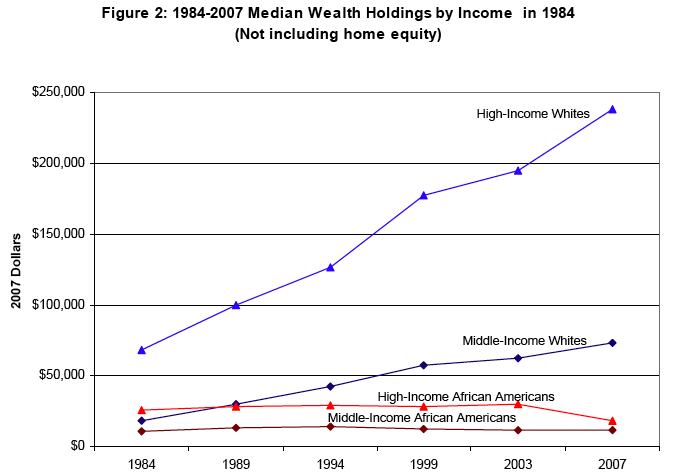
Racial wealth gap in USA

Talk about the rich getting richer?!!! Extraordinary data on Naked Capitalism about the racial wealth gap in the USA. The data is from a recent report by the US based Institute on Assets and Social Policy

Picture 48

The study authors argue that taxation policies and public policies are major factors in creating this wealth disparity. It would be most interesting to see similar Australian data.

What studies like this remind us (not that we need to be reminded in this country) that public policies that favour and benefit the wealthy and those who control capital (the rich, the corporations, the business elite) ultimately widen the wealth gap not reduce it, and they entrench and intensify inequality.


Tuesday, April 20, 2010

Random Thoughts*: Tony Judt


"Inequality is corrosive. It rots societies from within. The impact of material differences takes a while to show up: but in due course competition for status and goods increases; people feel a growing sense of superiority (or inferiority) based on their possessions; prejudice toward those on the lower rungs of the social ladder hardens; crime spikes and the pathologies of social disadvantage become ever more marked. The legacy of unregulated wealth creation is bitter indeed."

Tony Judt, Ill Fares the Land, New York Review of Books, April 29, 2010

* Random thoughts is a attempt to use the words and thoughts of others to illuminate aspects of contemporary life here in Australia and Western Australia.